

A wallet can show you a transaction that costs a few dollars, succeeds in seconds, and still leave you with less control than you expected. That is the counterintuitive part of DeFi: the visible action—clicking “Confirm”—is often the least informative stage of the interaction. The real event is a permissioned call to software on a blockchain, possibly involving several contracts, token approvals, price assumptions, and network-specific risks. For US-based DeFi users, a capable multi-chain wallet is therefore not merely a place to store assets. It is an inspection layer between human intent and executable code.
That distinction changes how an advanced wallet should be evaluated. Speed and a clean interface matter, but the more important question is whether the wallet helps you understand what a contract call is likely to do before you sign it. Transaction simulation and security warnings can reduce avoidable mistakes, yet neither is a substitute for judgment. They are decision-support tools: useful precisely because they expose uncertainty, surface unusual behavior, and create a pause before an irreversible action.
What actually happens when you interact with a smart contract?
A smart contract interaction begins with a message constructed by a decentralized application, or dapp. That message usually identifies a destination contract, a function to call, encoded parameters, a gas limit, and a fee setting. Depending on the network, it may also include a token value. Your wallet presents the message for signing, and the resulting cryptographic signature authorizes the network to process it from your address.
The important detail is that the wallet is not normally “approving a website.” It is signing a structured request addressed to a contract. A decentralized exchange might ask a router contract to swap one token for another. A lending protocol might ask a market contract to supply collateral. A bridge might initiate a message or transfer that is completed through additional infrastructure on another chain. The dapp supplies the user interface, but the blockchain executes the contract call and follows the contract’s logic.
Token approvals add another layer. Many ERC-20 tokens use a separate approval transaction that allows a spender—often a router or protocol contract—to move a specified amount of tokens later. This means a user may believe they are making one swap while actually granting a reusable permission first. The approval can be limited to the intended amount, or it can be set to a very large allowance for convenience. Those choices have different risk profiles. A compromised or malicious spender may be able to use an outstanding allowance, subject to the token’s design and the account’s remaining balance.
This is why transaction review should focus on state changes, not just network fees. Ask: which address receives permission, which assets can move, how much can move, and what will the account hold afterward? A low gas estimate does not make an unlimited approval safe. Conversely, a complex-looking call is not automatically malicious; some legitimate protocols use several contracts because their architecture separates routing, custody, accounting, and settlement.
Why transaction simulation is valuable—and why it is not magic
Simulation attempts to execute a proposed transaction in an environment that models the current or expected blockchain state without broadcasting the final transaction. The wallet can then inspect likely outcomes: tokens received or spent, balances changed, approvals created, and whether the call appears likely to revert. In practical terms, simulation turns an opaque instruction into a preview of consequences.
That is a meaningful improvement over blindly signing hexadecimal data. It can reveal an unexpected token leaving the wallet, a surprising recipient, a failed swap, or a contract call whose outcome differs from the dapp’s headline description. For a user moving between Ethereum, layer-2 networks, and other EVM-compatible chains, this visibility is especially useful because similar interfaces can hide different contract addresses, fee markets, liquidity conditions, and bridge mechanisms.
But a simulation is a forecast conditioned on a particular state. Blockchain state can change between the simulation and inclusion. A pool’s reserves may move, a lending position may cross a liquidation threshold, or a protocol may behave differently when a transaction is bundled or ordered in a specific way. Some external calls, oracle updates, signatures, and cross-chain messages are difficult to model completely. A simulation may also report what a transaction would do if accepted while saying less about whether the contract itself should be trusted.
The correct mental model is not “simulation proves safety.” It is “simulation checks whether the proposed state transition matches my intention under the observed conditions.” That is a narrower claim, but it is much more useful. If the preview says you will receive a particular asset, verify that the asset address is the one you intended. If it shows a broad approval, decide whether that permission is necessary. If it fails to simulate, treat the failure as information rather than simply bypassing the warning.
What a multi-chain wallet changes in practice
A multi-chain wallet reduces the friction of managing addresses and assets across several networks, but it also introduces a dangerous source of confusion: network similarity. EVM chains often use familiar account formats, yet an address that looks identical across networks does not mean the assets, contracts, or transaction history are interchangeable. Sending an asset on the wrong network can create recovery problems, and a bridge transfer involves additional trust assumptions beyond an ordinary transfer.
Network selection should therefore be treated as part of the transaction’s meaning. Before signing, confirm the active chain, the dapp’s expected chain, the destination contract, and whether the asset exists natively or is represented through a bridged version. A wallet that groups activity across networks can improve situational awareness, but aggregation should not erase the chain-specific details that determine execution.
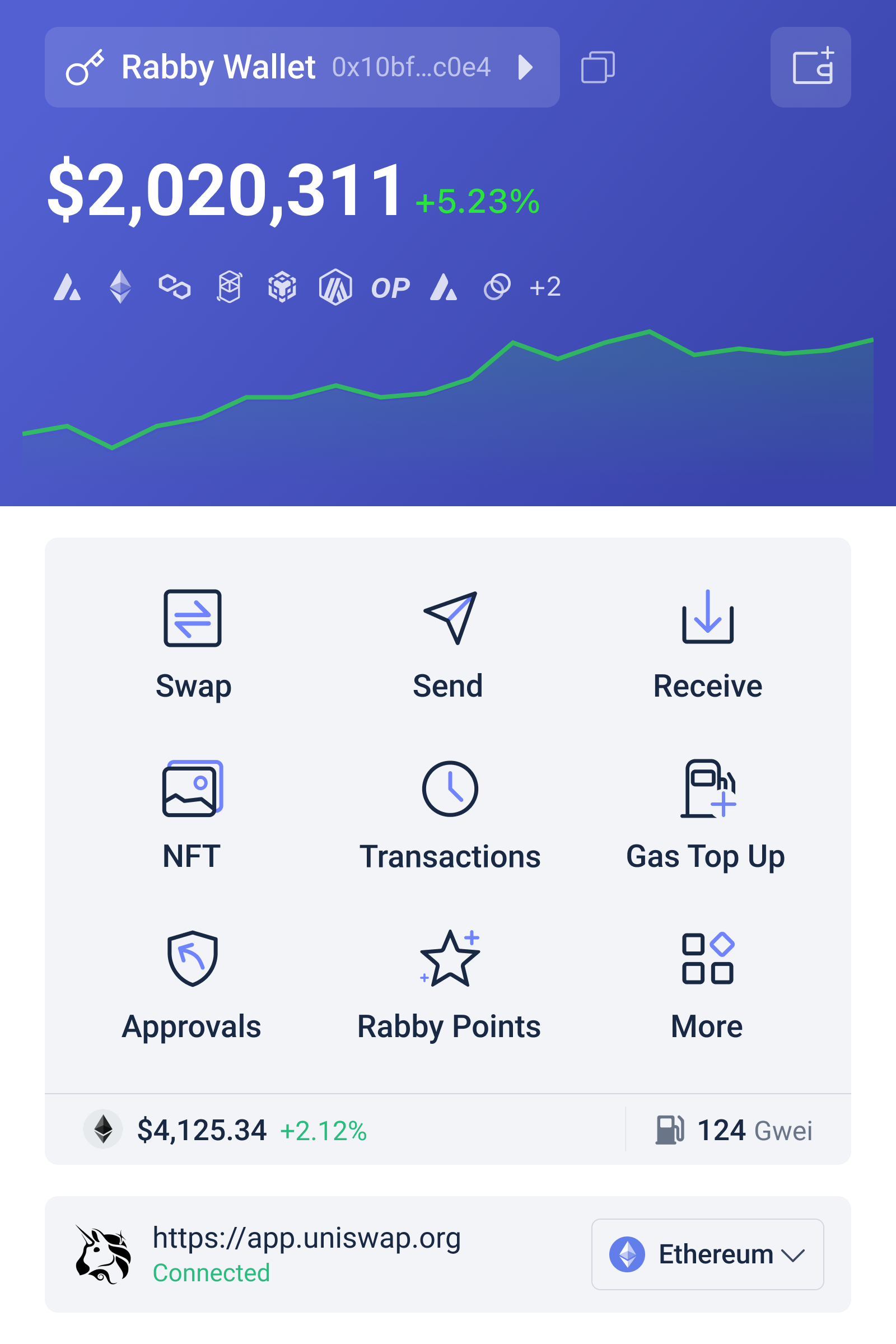
This is where an advanced tool such as rabby wallet can offer practical value for users who want transaction previews and security-oriented checks alongside multi-chain access. The value is not that a wallet eliminates protocol risk. It is that it can put more relevant information in front of the signer at the moment when information has the greatest chance of changing behavior.
There is a trade-off, however. More warnings and more detail can create alert fatigue. If every interaction produces a dense list of notices, users may learn to click through them. A good workflow distinguishes between ordinary complexity and meaningful deviation: a known router call with expected token movements is different from an unfamiliar spender, a mismatched chain, an unlimited approval, or a recipient that does not fit the stated action.
Security is a layered problem, not a wallet feature
Smart contract safety has at least three separate dimensions. First is interface integrity: are you connected to the intended dapp, or a convincing imitation? Second is contract behavior: does the deployed code do what the protocol claims? Third is account authorization: what exactly are you signing, and what permissions will remain afterward? A wallet can help with the third dimension and may provide signals about the first and second, but no interface can independently establish that every contract is legitimate.
Consider a phishing site that requests a perfectly valid approval. The transaction may simulate successfully because the contract is behaving exactly as written. The problem is that the user was directed to the wrong contract. Similarly, a well-known protocol can contain upgradeable components, administrative controls, oracle dependencies, or economic vulnerabilities that are not visible from a single transaction preview. Security labels are evidence to consider, not guarantees.
Private-key hygiene remains foundational. A wallet that improves transaction interpretation cannot recover a compromised seed phrase, reverse a confirmed transfer, or protect funds that a user deliberately exposes through a malicious signature. Hardware-wallet support, separate accounts for experimentation and long-term holdings, and regular review of token allowances are complementary controls. The strongest setup is usually layered: reduce exposure, inspect the action, limit permissions, and isolate higher-risk activity.
A reusable review framework before signing
For routine DeFi activity, a short review can be more reliable than trying to understand every line of contract code. Start with identity: is the dapp and contract the one you intended? Continue with scope: is this a transfer, an approval, a swap, a deposit, a permit signature, or a more complex call? Then inspect outcome: which assets leave, which assets arrive, and what permissions persist after the transaction?
Next consider conditions. Check slippage, deadlines, collateral ratios, bridge routes, and the difference between a native asset and a wrapped or bridged representation. Finally, consider reversibility. A failed transaction may waste gas, but an accepted transfer or approval may create a lasting exposure. The more difficult the action is to undo, the higher the standard for verification should be.
This framework also helps interpret warnings without panic. A warning is most useful when it changes a decision. If the wallet identifies an unknown spender, pause and verify it. If simulation shows a larger token outflow than expected, reject the call. If the result cannot be simulated, reduce the amount, investigate the protocol, or wait for clearer information. Treating every warning as either a catastrophe or meaningless noise are both poor security habits.
What to watch as wallets become more intelligent
Wallets are moving toward a role closer to transaction interpreters than passive key containers. If simulations become more accurate across complex calls, users may be able to compare intended outcomes with predicted state changes in a more standardized way. That could improve DeFi usability, particularly for people who operate across several networks rather than staying inside one familiar ecosystem.
The unresolved issue is how much confidence users should place in automated interpretation. A machine-readable explanation can be wrong, incomplete, or based on stale information. As protocols become more composable, the number of contracts involved in a single user action may increase, making perfect explanation difficult. The likely best outcome is not automation replacing review, but automation prioritizing review: highlighting the unusual parts so human attention is directed where it matters most.
For US users, recordkeeping is another practical implication. Multi-chain activity can involve swaps, liquidity positions, rewards, bridges, and transfers between personal wallets. A clearer transaction history may help reconstruct what happened, but wallet displays are not automatically tax records, and classification can depend on facts outside the transaction itself. Keep independent records of dates, assets, cost basis, and purpose rather than assuming a visual history resolves every reporting question.
Frequently asked questions
Does transaction simulation guarantee that a DeFi transaction is safe?
No. It can show likely state changes and identify mismatches between the requested action and the expected result, but it cannot guarantee that a contract is honest, that a website is genuine, or that blockchain conditions will remain unchanged until execution. Use simulation as a pre-signing check, not as a security certificate.
Why can a multi-chain wallet show the same address on different networks?
Many EVM-compatible networks use the same address format and the same type of account derivation. The address may therefore look identical across chains, while the balances, contracts, transaction history, and risks remain network-specific. Always verify the active network before sending funds or interacting with a protocol.
Should I approve an unlimited amount of a token to save time?
Unlimited approvals can reduce repeated approval transactions, but they create a broader permission if the spender is compromised or behaves unexpectedly. A limited approval may cost more time or gas, yet it narrows potential exposure. The appropriate choice depends on the protocol, the account’s purpose, and how much risk you are willing to retain.
The central lesson is simple but easy to miss: a wallet does not merely transmit a transaction. It mediates a decision about state, permission, identity, and irreversibility. The best multi-chain workflow is not the one with the fewest clicks; it is the one that makes the important consequences visible before the signature leaves your control.